Modes of PRO assessment for clinical application
Electronic PRO assessment (1): definition, (dis-)advantages

In this course, electronic PRO (ePRO) assessment means collecting, processing, and displaying PRO data via digital devices.

| Data collection/entry via digital device(s) | IT-supported data processing | Data visualisation via electronic device(s) |
Requirement: PROM software as a platform for collecting, processing, analyzing, and presenting PRO data.

- automated questionnaire allocation (e.g. by diagnosis/time point)
- adaptable, user-friendly interfaces (e.g., large font, one-item-at-a-time display, progress bar, pause/resume)
- supports Computerized Adaptive Testing (CAT, see Chapter 3 for more information)
- automated evaluation (e.g. calculation of scales/scores)
- automated graphical overview (e.g. color-coding)
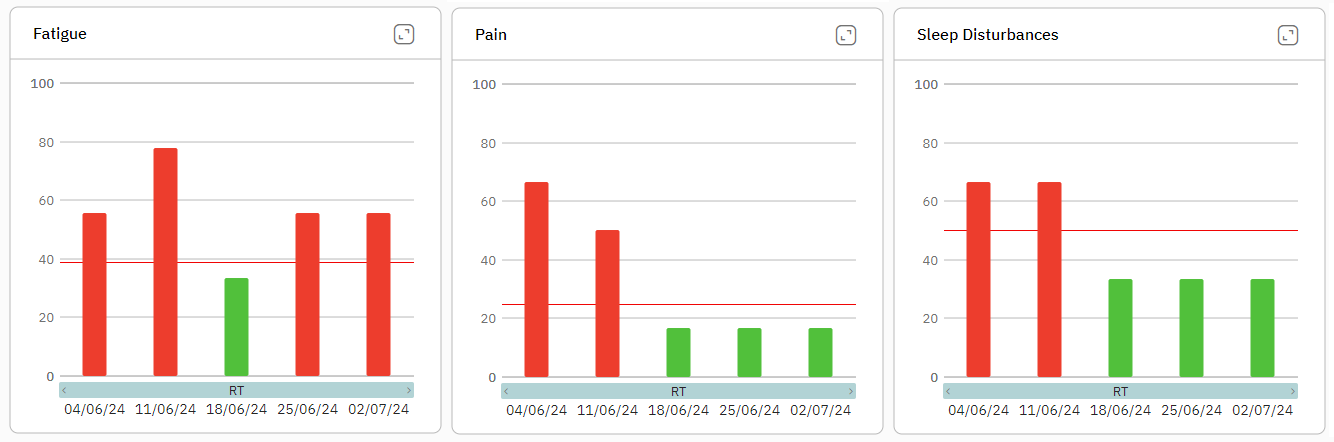
- graphical visualisation of multiple assessment times (e.g. symptom trajectory)
- automated integration of PRO data into clinical records
- easy accessibility of PRO data with respective authorization (e.g. from different computers)
- export of aggregated PRO data for further evaluation
- allows linking PRO data and further information (e.g. guideline recommendations for HCPs, self-management advice for patients)
Studies1,2 show that patients accept electronically assessed PROs well and prefer the electronic assesment over the paper-pencil-based



Consolo et al. 2022; Corsini et al. 2017; Jensen et al. 2014
1Ashley et al. 2013; 2Wintner et al. 2015