Interpretation of Patient-Reported Outcome data
Case Example 2: Interpretation of PRO results of patient Louis

Example 2: Louis Brown
Louis is 29 years old and was diagnosed with advanced Morbus Hodgkin. He has received his first cycle of chemotherapy. The second cycle of his therapy is provided in an outpatient setting.
At his first visit to the clinic after the start of his chemotherapy, Louis is introduced to PROMs and the patient web portal at the clinic. He is asked to complete a PROM (EORTC QLQ-C30) at home once a week prior to his consultation with the clinician.
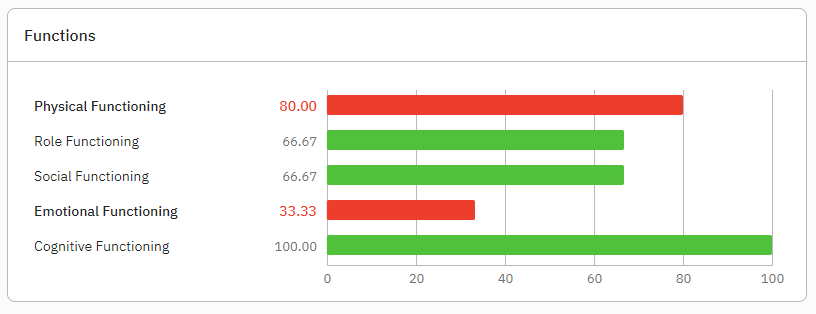
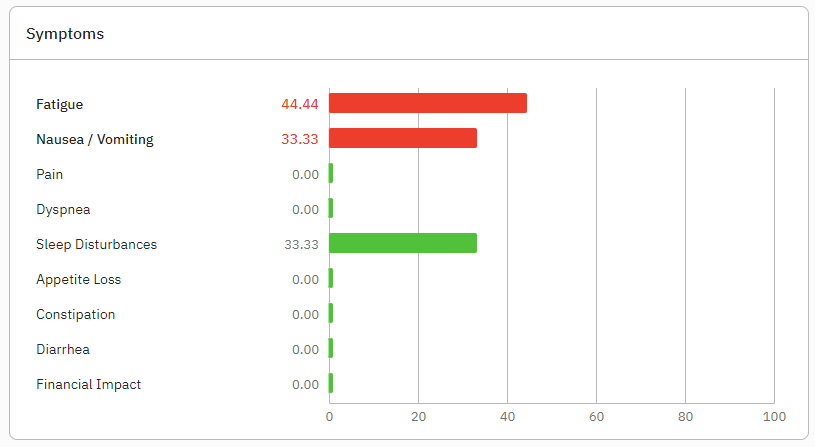
Louis and his clinician view the results of the functioning and symptom scales of the EORTC QLQ-C30 together and talk about the symptoms he reported. For details on communication of PRO results, see Chapter 8.
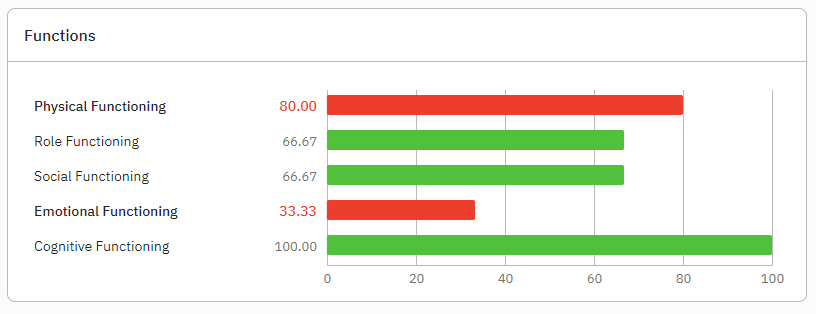
The software that Louis’ clinic uses includes the thresholds for clinical importance (Giesinger et al. 2020).
- green bars for no or only little self-perceived burden
- red bars for severe self-perceived burden (bar changes to red when the cut-off of based on the thresholds for clinical importance is exceeded).
This colouring helps Louis and his clinician to quickly identify which areas exceed their thresholds of clinical importance and require further investigation and/or the initiation of clinical interventions (e.g. psycho-oncological support).
According to the bar chart, Louis reported severe burden in emotional and physical functioning, fatigue, and nausea/vomiting (see red bars). All these areas need to be addressed during the clinical consultation.