Interpretation of Patient-Reported Outcome data
Case Example 1: Interpretation of PRO results of patient Emily
Example 1: Emily Summer
Emily is 66 years old and was diagnosed with locally advanced breast cancer. She is currently undergoing hormone therapy and has just started radiation therapy. The treatment is being carried out in an outpatient setting.
Emily is introduced to PROMs to keep track of her symptoms and wellbeing. She is asked to fill out the EORTC QLQ-C30 questionnaire on a tablet for the first time in the waiting room.
Results are automatically stored in the clinical documentation and reviewed and discussed together on screen during the medical consultation (see Chapter 8 for communication of PRO data). The clinic’s software applies EORTC thresholds for clinical importance (Giesinger et al., 2020) and shows colour-coded bars (0–100) for symptom scales.
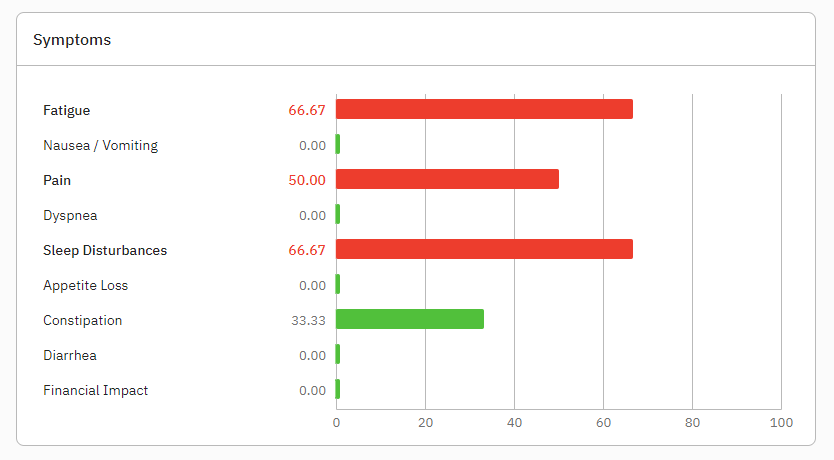
Symptoms above the threshold are highlighted in red: fatigue, pain, sleep disturbances
Guided by these “red flags”, the clinician explores the issues by discussing them with Emily in more depth:
- Pain and fatigue impair Emily’s daily functioning (physical/role).
- Sleep problems are linked to emotional burden/rumination, contributing to fatigue.
After discussing Emily’s symptoms, they agree to change her medication to reduce joint pain. The clinician emphasises the importance of physical activity for fatigue, addresses sleep problems and emotional burden, and arranges referral to a psycho-oncologist.
Emily completes the QLQ-C30 repeatedly before her weekly radiotherapy visits, using her electronic device from home via the patient web portal.
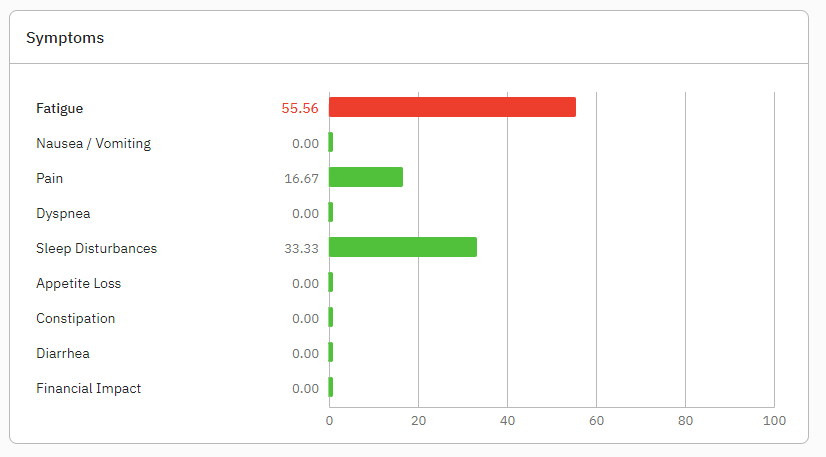
The cross-sectional review a few weeks later shows overall symptom burden has decreased, but fatigue remains clinically important (still red). Asked about it, Emily describes fatigue as her most bothersome symptom.
The longitudinal presentation of the three symptoms most relevant to Emily helps to interpret changes over time.
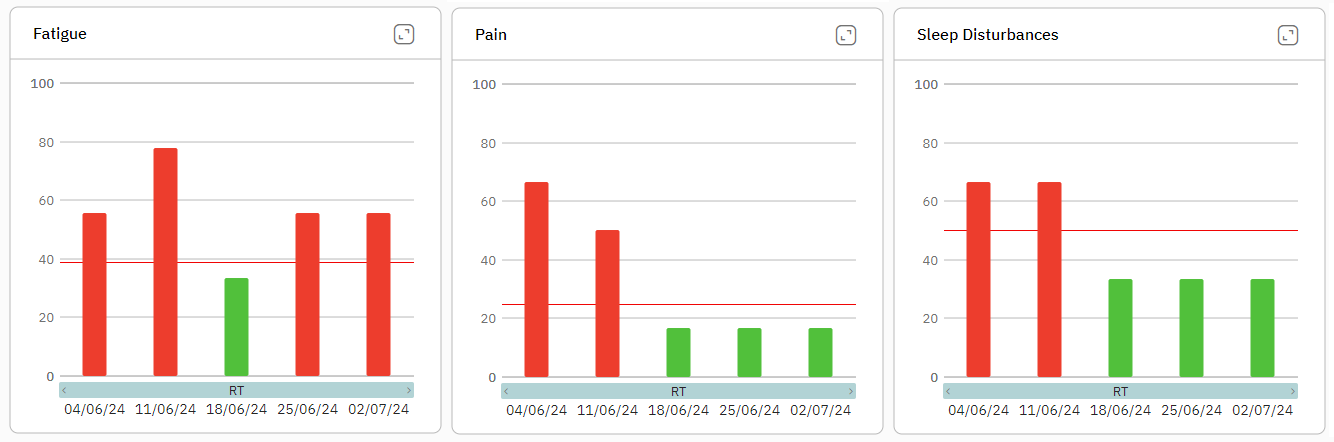
The red line marks the threshold for clinical importance, with the treatment phase shown below (RT = radiation therapy).
PROMs indicate persistent fatigue, despite a temporary improvement; Emily reports that she finds it difficult to follow the recommendations for self-management of fatigue. She still needs support in this area. Pain has decreased and stabilised at a low level, and emotional burden and sleep problems have improved. Emily confirms she feels a bit better in that regard. They agree to continue the current medication and ongoing psycho-oncology support.
In Emily’s case, the threshold-based, colour-coded PRO displays enabled rapid identification of clinically important problems (screening) and, combined with longitudinal trends (monitoring), helped tailor supportive care and follow-up discussions over the treatment course.