Patient-Reported Outcome-based self-management of patients
Example of PRO-based self-management support

Example: Emily Summer
To illustrate the potential benefits of using PROMs to support self-management, let’s look again at Emily Summer, the patient you may already know from Chapter 7.
Emily is 66, has advanced breast cancer, and has completed treatment. She is now transitioning to follow-up care and continues to complete the EORTC QOL PROMs regularly at home.
Utilizing PROMs for Self-Management:
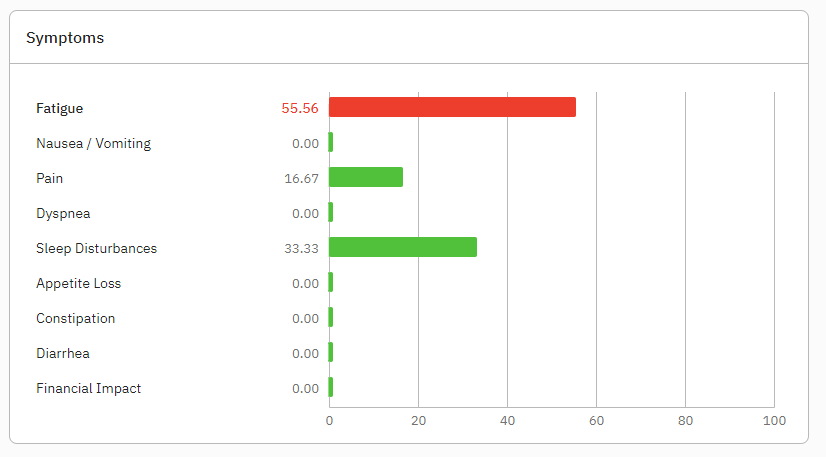
Emily can track symptoms independently. If a symptom such as fatigue exceeds a threshold of clinical importance, the portal automatically provides self-management materials. She can contact the team if needed (e.g., for medication or lifestyle adjustments).
Emily receives reliable information about breast cancer survivorship and self-management through educational materials from her healthcare team and reputable online resources on the patient portal. For example, if she reports severe fatigue in the PRO assessment, she is given tailored advice on the management of fatigue she can incorporate in her daily routines.
Based on Emily’s PRO data on her psychosocial status, she receives targeted support and resources such as contact information regarding counselling services, support groups, or instructions on mindfulness-based stress reduction techniques (either from her health care team or automatically on the online portal). Based on the information she received, she discovers a local peer support group and values connecting with others affected by breast cancer.
Based on the information gathered from Emily's PROMs, her healthcare team is able to identify additional supportive care needs to be met by available services, such as nutritional counselling or pain management services. Emily is encouraged to use these services as needed to optimise her quality of life.
Emily’s oncologist uses PRO data to guide appointments and decisions, actively addresses her concerns and preferences, and thereby strengthens the therapeutic alliance. Joint interpretation helps Emily understand symptom relevance and supports an active role in her care.